



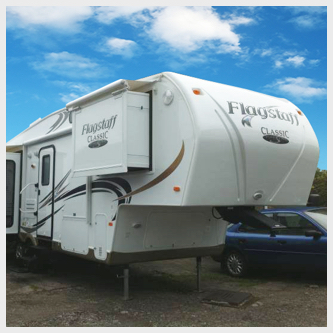
Caravan ownership often reflects years of planning and careful saving. It’s the perfect choice for holidays, seasonal trips, and extended stays away from home. In many cases, it is one of the most valuable assets an owner holds outside their property. Unlike cars, caravans are often stored off-site, left unattended for long periods, and kept in locations with limited daily supervision. These conditions increase exposure to organised theft.
At Trackerfit, conversations with caravan owners often reveal a similar assumption. Many believe their caravan is secure because it is locked, hitched to a wheel clamp, or stored in what appears to be a safe compound. Real theft cases frequently show a different outcome. Caravans can be taken quickly, sometimes without drawing attention, and physical security measures provide no information once the unit is moved. This gap is where tracking technology becomes essential.
Why Caravans Are Targeted by Organised Theft Groups
Caravans have both high resale value and ease of transport. Once a thief gains access, towing the caravan away can take only minutes. Storage sites are often remote or visited infrequently, which means thefts can go unnoticed for hours or even days.
After removal, caravans are rarely taken straight to a final location. They are often moved between temporary holding areas, parked in industrial zones, or relocated across regions to reduce the chance of discovery. Without location data, recovery relies on chance sightings rather than informed action. By the time a theft is reported, the caravan may already be concealed or prepared for resale.
Wheel clamps, hitch locks, and alarms still serve a purpose as deterrents. Their value ends once the caravan is mobile. At that point, they offer no insight into where the caravan has gone or how it is being moved. This is why a tracker becomes a recovery tool rather than an optional extra.
How Caravan Trackers Support Faster Recovery
Caravan trackers use GPS technology supported by GSM and GPRS communication. GPS identifies the caravan’s position, while mobile networks transmit that data so it can be viewed in near real time. This combination allows owners or monitoring centres to see movement as it happens.
If unauthorised towing or movement occurs, alerts can be triggered immediately. The time between theft and response has a direct effect on recovery outcomes. Early detection allows action while the caravan is still in transit, before it is hidden or moved further away. This greatly improves the chance of recovering the caravan intact.
Understanding different tracking technologies
Not all caravan trackers rely on the same methods. Some systems operate using GPS, while others use alternative technology such as VHF, or very high frequency radio signals.
VHF-based systems transmit radio signals rather than depending on satellite positioning. One advantage of this approach is resistance to signal blocking. Some systems also operate within a shared network, allowing signals to be detected by other equipped vehicles. This increases the chance of locating a caravan even when it is concealed.
In the UK, certain tracking technologies can be detected by police vehicles and aircraft fitted with compatible equipment. This supports active location during recovery operations and offers a different response route compared with owner-only monitoring. The most suitable option depends on how the caravan is stored and the level of response an owner prefers.
Protection during storage and long periods of inactivity
Caravans often remain unused for extended periods, especially during winter or when owners travel abroad. Regular site visits are not always practical, which makes remote oversight essential.
Tracking systems designed for low power use and long battery life allow monitoring to continue while the caravan is parked for weeks or months. Owners can confirm location remotely and receive alerts if unexpected movement occurs. This is particularly useful for caravans stored in compounds, rural settings, or shared facilities where access is limited.
Consistent monitoring provides reassurance during inactivity and reduces reliance on periodic visual checks.
Why professional installation matters
The performance of a caravan tracker depends heavily on how it is installed. Poor placement can lead to weak signals, unnecessary battery drain, or easy discovery by thieves. Discreet installation reduces the risk of tampering and supports long-term reliability.
Professional installation ensures the device is positioned correctly, connected safely, and tested before use. Nationwide fitting allows installation at home, at a storage site, or at a dealership, depending on owner preference. Proper testing confirms the system is working as intended from the moment protection begins.
Choosing the right caravan tracker for your needs
Caravan owners use their vehicles in different ways. Some tour frequently throughout the year, while others store their caravan for long periods between trips. Some travel within the UK only, while others tow abroad. These factors influence which tracking features are most useful.
Options include monitored subscription trackers, self-monitored systems, and subscription-free units with a single upfront cost. The right choice depends on storage location, usage patterns, and the level of response required if a theft occurs. Selecting a tracker based on real use helps avoid paying for features that offer limited value.
Peace of mind through visible protection
Caravan ownership should focus on travel and time away, not concern about theft. Caravan trackers provide protection through early alerts, clear location data, and improved recovery chances if the worst happens.
Owners looking to secure their caravan can review available tracking options online or speak directly with the team on 0800 756 5100 for advice based on their caravan and how it is used.